So, it took us ten days to cross the Atlantic. During that time, we had a Sea Olympics, tryouts for an upcoming Talent Show, a Short Film Festival, and Hallowe’en. I’m pretty sure the students went to some classes, too! The film festival showcased shorts of up to three minutes in length, and I was on the judging panel. The woman who organized it, Erika Paterson, is Canadian and claimed this was why she secretly told us to make up a category for each film because all were going to be winners. Some of the categories I found while watching were: Best Use of Sheep Bells and Best Use of Making Me Consider What I’ve Missed on the Journey as well as Best Use of Breaking Ship’s Rules. Hmmm.
The Sea Olympics were great fun. I participated with the Vitamin Sea team--which consisted of faculty, staff, lifelong learners, and family--in events such as the Obstacle Course, the Tug o’ War, and the Pull-Up competitions. Most of our team may have been decades older than the other teams--all students and named for actual seas such as the Adriatic and the Baltic--but we held our own. The obstacle course ended with a puzzle of Africa and since we had a geographer on our team, we placed well in that. We took the Silver in Doubles Ping Pong and the Tug o’ War, and many people thought the only reason we lost the latter was because we had a mere thirty-second rest between the semi-finals and the finals, plus the other team used a hand-over-hand tug, which according to the rules, isn’t allowed. We didn’t contest, because this was mainly for students and in any case, we were happy with how well we did. The only Gold our team took in the Olympics was for pull-ups. Guess who won?
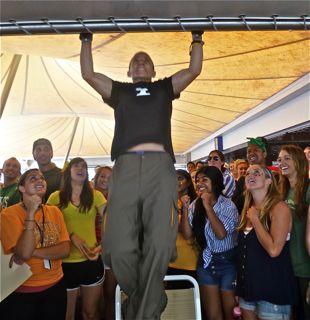
Now it may look like there are only women around me, but to my right, there was a whole group of men and another pull-up bar. I wasn’t sure where to compete, but after all was said and done, it didn’t matter. I completed 19 legal pull-ups and that topped everyone, including all the 18-21 year-old guys. BTW, a couple days later, I did 21 but only had one witness for that.
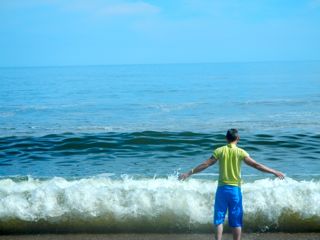
Among the other enjoyable moments of the crossing were the animal sightings: sea lions when we left Cape Town, whales--yes, I finally saw one!--and albatross, flying very close to the ship. Yum, yum chum.

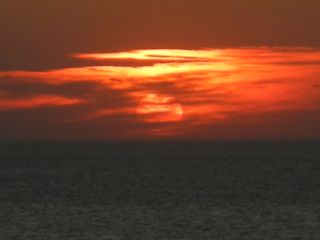
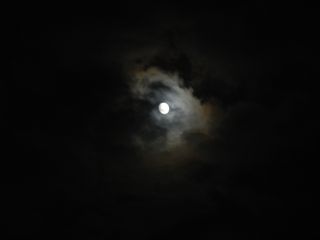
We also had some interesting weather. Lots of fog and with that, a fogbow and some amazing sunrises and sunsets, as well as a full moon. When the moon wasn’t so bright, we also got to see the Southern Cross, close to the horizon. We have an amazing astronomer onboard, Ian Campbell, who completely enjoys showing off the amazing sky above.


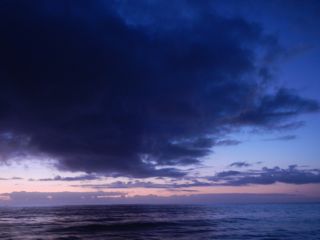
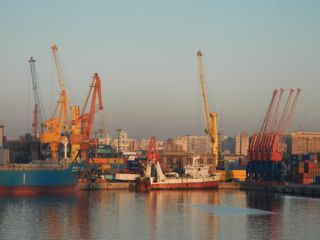
Sailing the Rio de la Plata, we pulled into the port of Buenos Aires, the capital and largest city of Argentina, with everyone completely ready to get off the ship: LAND! As soon as we were cleared by Immigration, off we went. I spent the first day walking around the city.
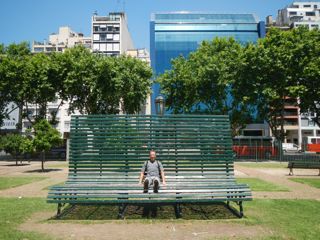
Buenos Aires has 48 barrios or districts, but I really only had time to explore Recoleta, one of the more affluent and historical downtown districts. Along the way, we passed parks and other grassy areas, and I had some fun posing with the art.

While walking along the Avenida Figueroa Alcorta, we came across the Floralis Genérica, a 75-foot tall steel and aluminum sculpture located in the Plaza de Las Naciones Unidas (Plaza of the United Nations). The sculpture was built to spread its petals in the morning and close them at sunset, though I’m not sure it’s working right now. It has a diameter of 105 feet with its petals opened and has a reflecting pool beneath it.

After lunch, we explored the Recoleta Cemetery, which admittedly, creeped me out a bit until I realized the photo ops were incredible and the ghosts had probably been chased away long ago by the tourists...or more likely, by the dozens of cats keeping an eye on things.
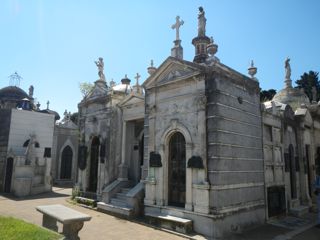
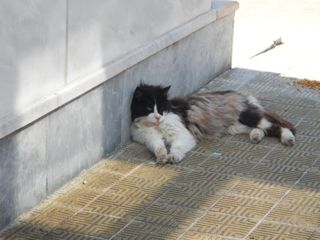

I’m telling you, the place is immense. The cemetery itself is housed on 14 acres and contains some 4,691 above-ground vaults, laid out along wide walkways that accommodate the thousands of visitors who tour the grounds each year, many of whom are there specifically to see the grave of Eva Perón, the Argentine champion of the people. You may know her by her nickname: Evita. Should you not be able to find her via the crowds of hovering tourists, she is interred in her family’s crypt, La Familia Duarte, located in map area H-6.
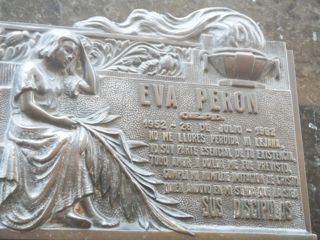
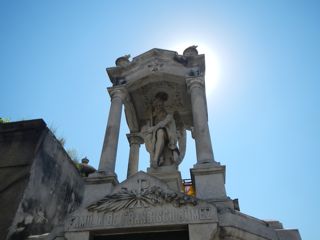


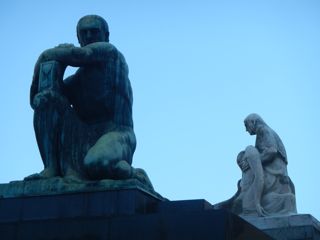
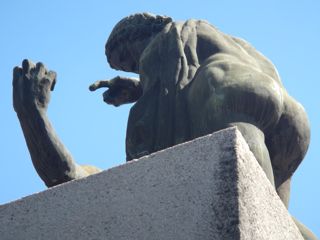
You can tell by the time the pictures below were taken, I’d warmed up to the idea of hanging out in a cemetery.


On the second day in Buenos Aires, we boarded a plane headed north for the town of Puerto de Iguazú, where upon landing, we immediately headed for the waterfalls of the Iguazú River, known as the Iguazú Falls, which spill nearly 300 feet over the edge of the Paraná Plateau. To put it in perspective, Niagara Falls reaches a mere 167 feet tall.
There are a number of islands along the edge of the Iguazú Falls, which divide the main waterfalls into anywhere between 150-300 smaller ones, depending on water level. We were there after some significant rains so we got to witness some full-force flow.

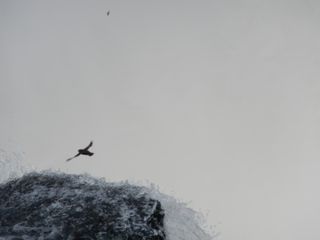
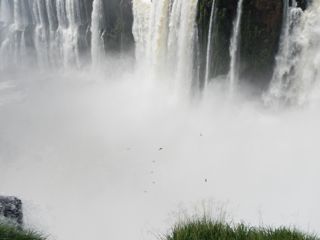

We then took a jeep ride and boarded a speed boat at Puerto Macuco, headed straight toward the belly of the beast, or in this case, its throat. Known as Garganta del Diablo, or Devil’s Throat, the chasm that gets about half the river’s flow is nearly 500 feet wide and more than 2,000 feet long and contains the border between Argentina and Brazil. It was Mary’s birthday and though we had every intention of singing her Happy Birthday as we sped close to the base of the waterfalls, we were all too busy ducking and hollering our way through the spray to open our mouths for anything else. She did, however, think it was an amazing way to spend a birthday.

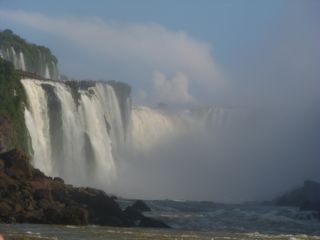
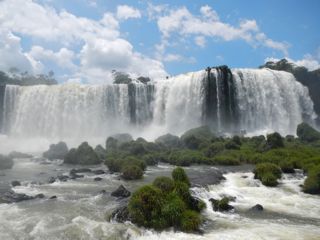
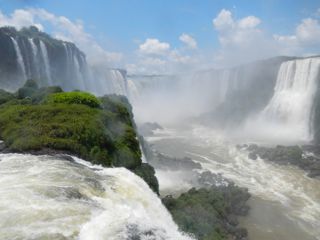
The next day, we took a bus to Foz do Iguaçu, on the Brazilian side of the Falls. It was going to be hard to top the exhilaration of the day before, but even though we didn’t get soaked, we did get close enough on a walkway to get sprayed, and we had some incredible and expansive views all along the way.



After this, we went to Foz Tropicana, a bird sanctuary. We only had about 90 minutes before we had to leave, so I had to skip or rush through some parts, though the birds we saw were truly amazing. One of them wished me good luck on my hat. No photos, please! The first creature we saw, however, was one that in my opinion was still dressed for Hallowe’en. It may be a white-headed marmoset by day, but at night, I hope he turns those eyes off.

I couldn’t tell you the species of most of the birds we saw, but some--like the flamingo and the toucan--were obvious.
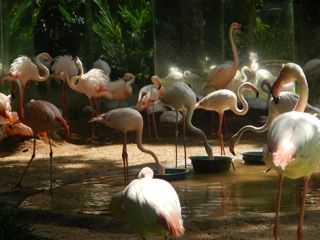
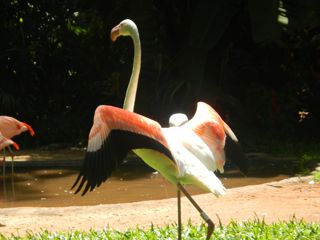


The diversity of birds felt impressive, though for some reason, my photos don’t reflect that as much as I’d hoped.


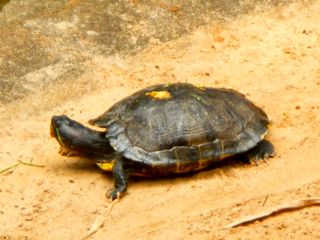
We also saw some reptiles, including my favorite: the turtle.

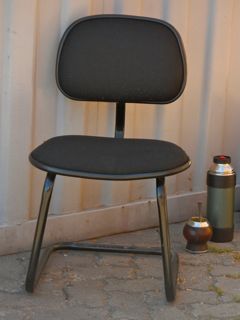
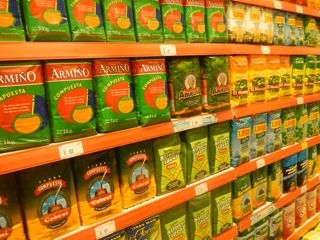
That night, we celebrated at Aqva Restaurant in the small town of Puerto de Iguazú. Though we didn’t go to the “place for steak”--after all, Mary’s vegetarian and the gathering was in honor of her birthday--I did manage to find a sirloin about half the size of my head, complete with onion risotto. Then there was flan with dulce de leche and some sort of crème brûlée with a maté foam for dessert. Maté can be found all over South America, prepared by steeping the dried leaves of yerba mate in hot water and served in a hollow gourd with a metal straw called a bombilla. We saw loads of people walking around carrying a thermos and their maté gourd, sipping as they walked.


Our flight back to Buenos Aires got delayed by an impending strike so we were late for our onboard call time. The ship was scheduled to set sail about an hour after we returned. We were with a good-sized group, however, so there was no danger of being left behind. As usual, the sun set nicely for our departure.


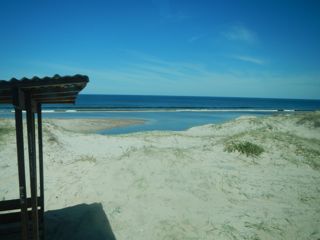
We have just an overnight trip to Montevideo, Uruguay, which by speed boat, is actually only about 90 minutes away. I have no idea what awaits, except of course, more maté.